
What Roanoke County Tax Records Show
Assessment and billing sit with different offices in Roanoke County. Real Estate Valuation ties an owner name and property address to the tax map. It also links them to the assessment card. The Treasurer handles the bill. The bill side shows charges and payment status. Appeal paperwork splits value into land, building, and total fields. That split answers yet another question. An assessed amount is not the amount due, and mixing those figures leads people astray.
| Field | What It Shows | Where |
|---|---|---|
| Assessed value | Annual real-estate valuation at fair market value as of the valuation date. | Real Estate Valuation / TaxView |
| Land, building, total | Separate components used in assessment review and the informal hearing form. | Appeal form and assessment card |
| Tax relief | Relief may be available for qualifying elderly or disabled owners. | County real-estate program |
| Tax bill and status | Charge, installment, balance, and payment information. | Treasurer / Citizen Self Service |
| Delinquent land | Sale-cycle notices and court process for qualifying unpaid taxes. | Judicial Sales page and Circuit Court |
Roanoke County sets assessed value each year through its annual process. The office updates the figure as that cycle runs. A deed's recorded sale price is consideration, a different animal from the assessment. Neither one is a private appraisal, either. Meanwhile, the Treasurer's balance can shift after a payment. A penalty, an adjustment, or a relief decision can change it too. For what is actually due, rely on the live bill record.
Roanoke County Annual Assessment
Roanoke County puts a fresh value on every parcel each year. The assessment date is January 1. Reassessment notices go out by mail in January. That letter gives owners an early look at how the county views their property. The valuation program aims for market value and uniformity across the tax roll. A Board of Equalization hears disputes when an owner believes the appraisal is off.
That notice is a starting point, not a tax bill. It also does not promise anything about a sale. The assessed figure may not match a later offer or closing price. The county's real-estate assessment page lays out the annual valuation role. It is worth comparing the land, building, and total components against the same parcel and tax year before questioning a change.
Roanoke County Land and Building Values
The informal hearing form requests the tax map number, account number, deeded owner name, and property address. It also asks for the proposed assessment, land value, building value, and total value. The owner's opinion of fair market value and comparable tax maps or addresses complete the list. Those fields reveal how Roanoke County frames a value question. A land-only change needs one kind of evidence. A building condition issue needs another. A broad concern about the overall figure calls for something different again.
Keep the parcel and the year identical across every comparison. A nearby parcel may differ in lot size, improvements, zoning, or physical features. So a shared street name means little. The form invites comparables. A short, well-explained set beats a long bare list every time.
- Assessed value
- The county's valuation used in its tax system.
- Land value
- The amount assigned to the parcel's land component.
- Building value
- The amount assigned to improvements on the land.
- Total value
- The combined assessment figure shown for review.
Looking Up a Roanoke County Tax Bill
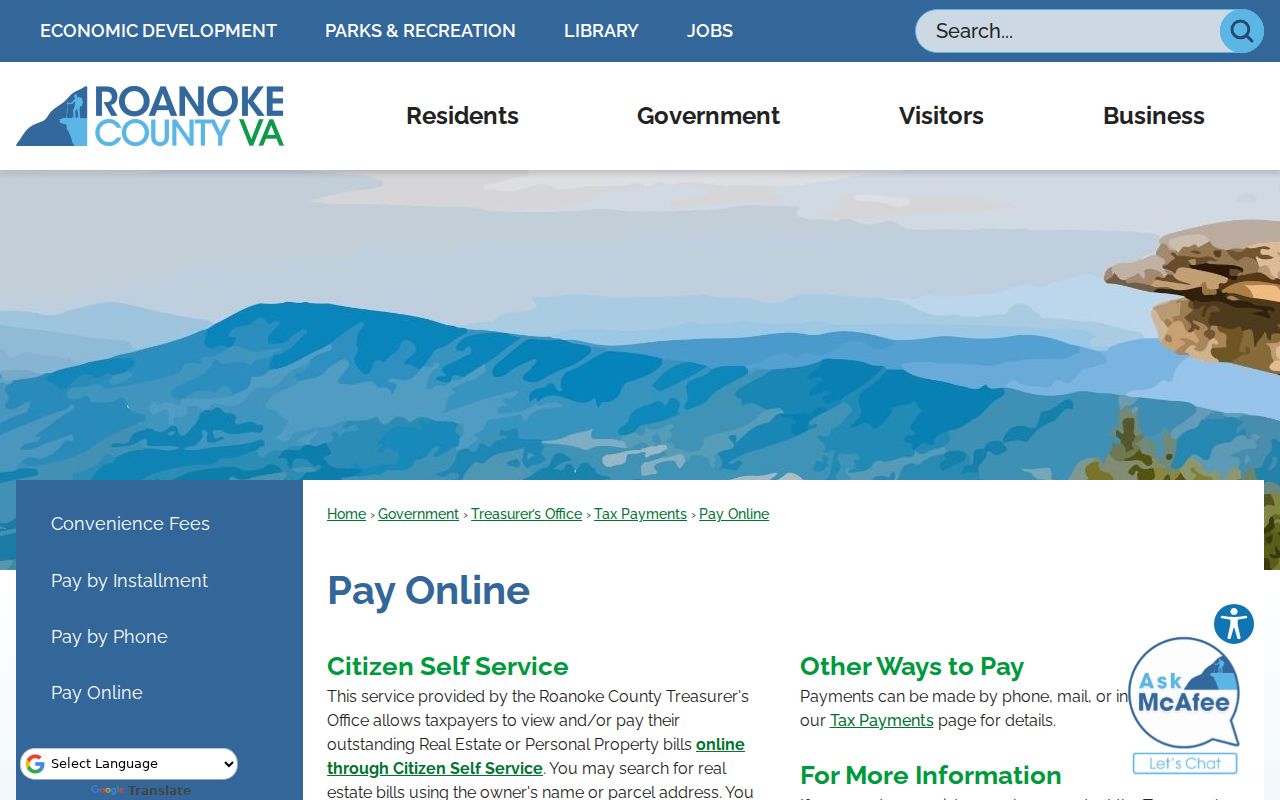
The Treasurer's Citizen Self Service page handles real-estate bill searches in Roanoke County. You can search by owner. You can also search by property address. Start with the address. Then confirm the returned account truly belongs to the parcel you mean. One more wrinkle: a property can carry a different tax mailing address, owner name, or lender contact. In that case, the bill page and the assessment card can show different information for the same land.
- Open the county's Pay Online page and follow its Citizen Self Service link.
- Search by owner or property address and confirm the parcel details.
- Review the installment, amount due, and payment status on the bill.
- Use the Judicial Sales page and court record if delinquency has reached a sale proceeding.
- Assessment
- The county's annual valuation of real estate for its tax system.
- Tax bill
- The Treasurer's charge and payment record for the parcel.
- Tax relief
- A county program that may assist qualifying elderly or disabled owners.
- Judicial sale
- A court-supervised process for certain delinquent real-estate taxes.
Roanoke County Treasurer Bill Search
Billing and collection are only part of the Treasurer's job in Roanoke County. The office also maintains tax mailing addresses and lender information. That is why a bill's name and mailing address may not match the owner line or situs on the assessment card. For payment status, go to the Treasurer's system. A GIS pop-up or deed index will not carry that answer.
The county's Citizen Self Service bill page describes the online lookup path. Convenience fees may apply to online payments. Phone, mail, and in-person options are listed too. Confirm the current channel and the amount due on the official page. Do that before sending any funds.
Roanoke County 2026 Tax Dates
The 2026 county calendar sets two real-estate installments for Roanoke County. The first half was due June 5. The second half is due December 7. Delinquent bills go out January 9 and July 9. Those dates belong to a single tax year, so check them against the current county calendar before planning a payment or judging an account late.
An older bill cannot tell you whether a later payment or credit posted. Citizen Self Service shows current account status. If the record looks inconsistent, contact the Treasurer. Keep the parcel's tax map and account number at hand so staff can find the right bill quickly.
Roanoke County Tax Relief Programs
Roanoke County offers real-estate tax relief for qualifying elderly or disabled owners. The county publishes no complete current eligibility table or application deadline, so confirm income limits, age or disability rules, required documents, and filing windows with the Treasurer or the county relief office. A general description is no substitute for those details.
Relief eligibility stands apart from the assessment itself. A parcel can carry a value that is correct for tax purposes and still qualify for a program that lowers what an eligible owner pays. Check the assessor value and the bill independently. Keep any award or application decision filed with that tax year's records.
Roanoke County Informal Review
A January notice gives an owner reason to act. Real Estate Valuation handles the first step. The informal hearing form records the parcel tax map, account number, owner, and property address. It lists the proposed assessment too. Land, building, and total values all appear. The owner adds a fair-market opinion and comparable tax map numbers or addresses. A close match keeps the discussion focused.
The form is paper; mail it to Real Estate Valuation, PO Box 29800, Roanoke, VA 24018, rather than counting on a portal submission. The county's appeal process page outlines each review step and the January notice.
Roanoke County Formal Value Appeal
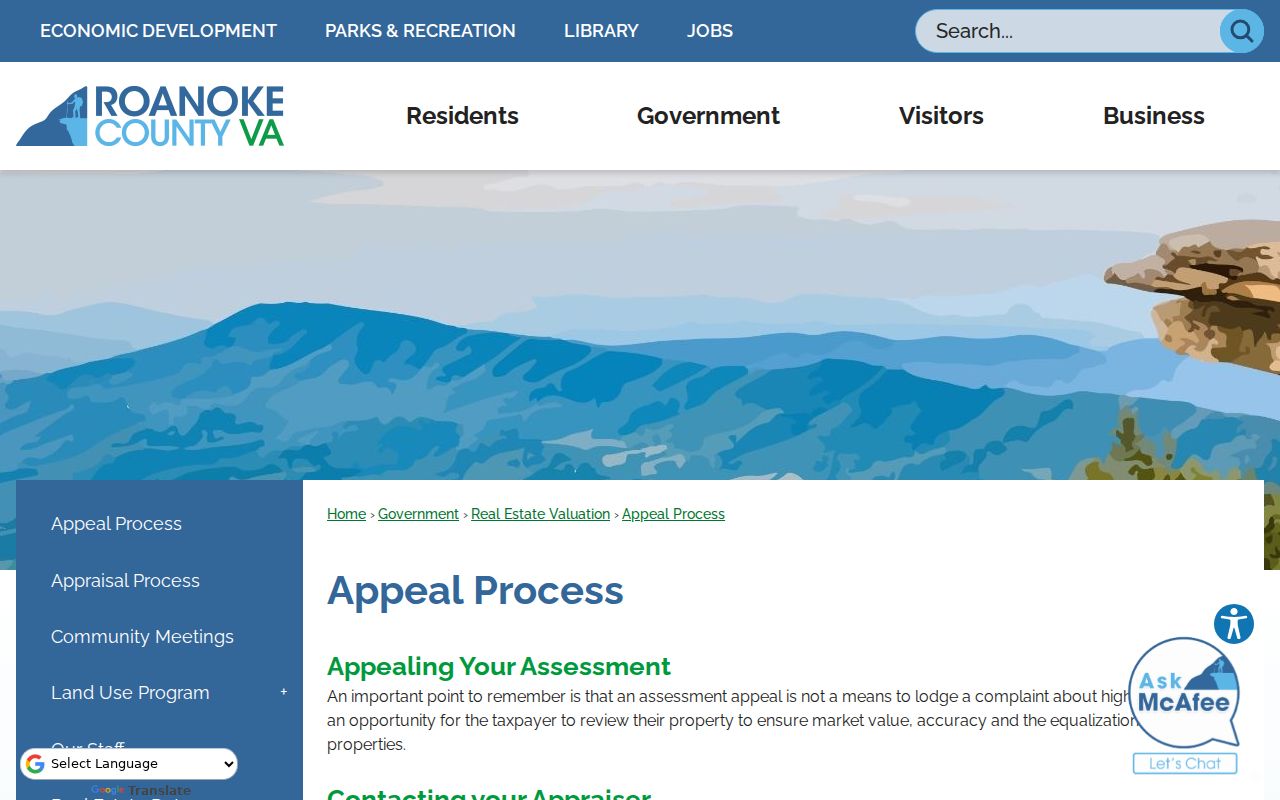
An unresolved value dispute does not end the road. Roanoke County's appeal materials describe a formal route with its own requirements. A Board of Equalization hears those cases. The required form, evidence, and timing come from the current notice and official appeal instructions. No single deadline fits every situation. The date attached to the current assessment controls, so treat any calendar rule with care.
Value and uniformity are separate arguments. A parcel may sit above its market evidence. Or it may be assessed differently from similar parcels nearby. The county's program aims for market value and uniformity together, so keep dated sale evidence, comparable parcels, land and improvement notes, and the exact assessment year in one file for a formal case.
Appealing a Roanoke County Assessment
A value appeal targets the assessment itself. The tax bill and any deed transfer are separate matters. Start with the January notice. Compare the parcel's land, building, and total figures against evidence from the same year. Roanoke County offers an informal review. A formal process is also available, and it includes the Board of Equalization. No universal deadline appears in the county's public materials. Follow the current notice for dates and filing instructions.
Review the notice promptly. Roanoke County sends reassessment notices in January and provides informal and formal review steps. Use the deadline printed in the current notice and confirm the procedure with Real Estate Valuation before filing.
Roanoke County Delinquent Tax Sales
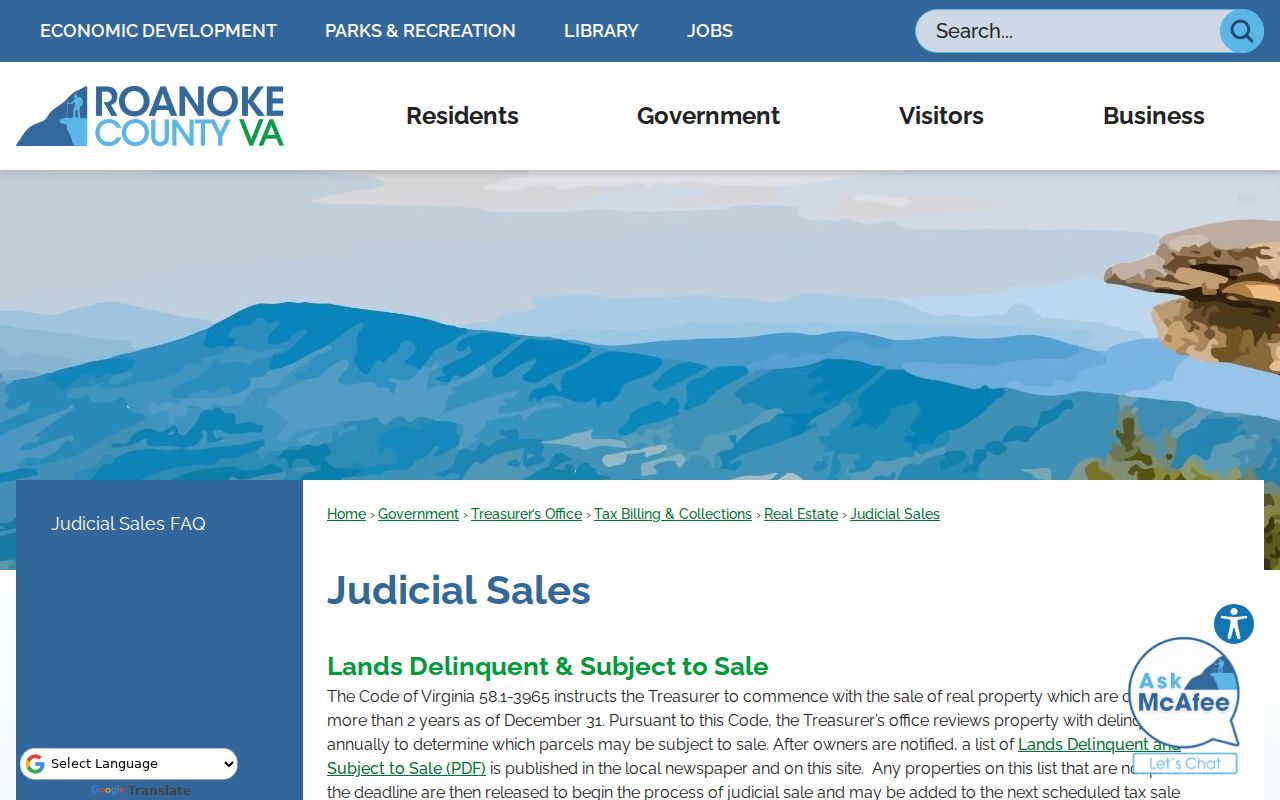
Roanoke County reviews real estate delinquent for more than two years as of December 31 under Va. Code §58.1-3965 and related provisions. Notices appear on the county site and in a local newspaper, with sale lists often posted about 30 days before an auction. The county page listed a September 25, 2026 sale, subject to change and court confirmation. A current notice should always be checked before relying on a sale date or parcel list.
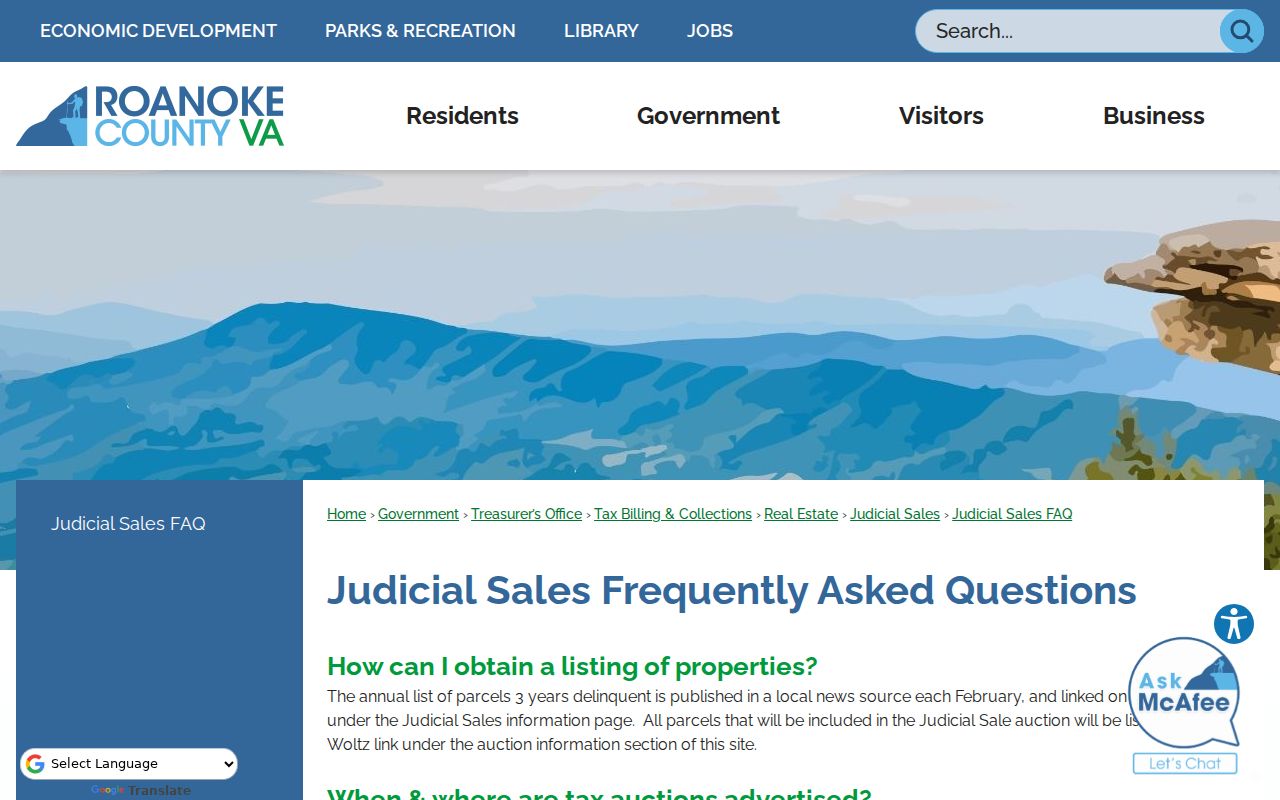
The Judicial Sales page publishes the county list and process, shown here. Inclusion on a delinquent-land list does not mean a sale has been completed. Review the court case and sale terms, and check the parcel's legal description before treating a listing as a transfer.
Roanoke County Tax Sale Redemption
Redemption is possible before the auction. The county FAQ allows payment through 5 p.m. on the day before the sale. The payment covers taxes, penalties, interest, court, auction, and advertising costs. Referral to docket removal takes six to twelve months. Court approval is required. Title usually follows six to eight weeks later. The county's judicial sale FAQ explains redemption and buyer diligence. Roanoke County does not sell tax-lien certificates. Paying another owner's delinquent bill does not make the payer the owner, so a bidder must independently review tax, zoning, building, code, boundary, easement, and title questions.
Read the current county FAQ and the court notice together before acting on a delinquent parcel. Every case sets its own timeline and costs.